Six Months Later: Why the Shiniest Website Redesigns End Up Collecting Dust

Photo by Photo by Lyubomyr Reverchuk on Unsplash on Unsplash
There's a familiar rhythm to the corporate website redesign. A committee forms. An agency pitches. Months of stakeholder reviews, wireframes, and brand workshops follow. Then, after a six-figure invoice and a champagne-worthy launch day, everyone exhales, updates their email signatures, and moves on.
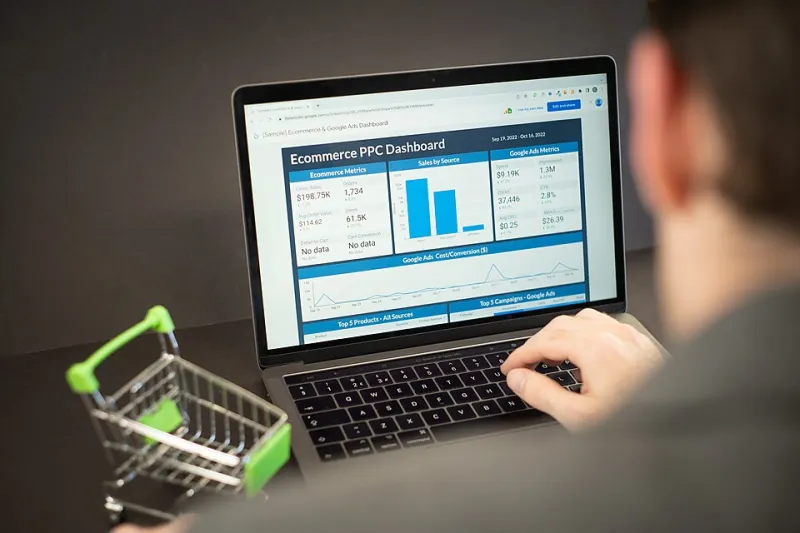
Six months later, the analytics dashboard tells an uncomfortable story: organic traffic has drifted back to its old baseline, conversion rates are flat, and the bounce rate on that gorgeous new homepage is creeping upward. The redesign didn't fail because the design was bad. It failed because everyone involved treated it as a finish line instead of a starting block.
The Launch-and-Ghost Problem
In our work with mid-market and enterprise brands across the United States, we've come to recognize a pattern we call the launch-and-ghost cycle. It unfolds in three predictable stages:
Stage one: the sprint. Budgets, attention, and executive sponsorship concentrate on getting the site live. Deadlines loom, and long-term considerations—content strategy, conversion optimization, performance monitoring—get deferred to a post-launch phase that never quite arrives.
Stage two: the honeymoon. The first six to eight weeks show a temporary lift. Employees share the new site on LinkedIn. Some of the traffic bump is genuine; much of it is novelty and direct traffic from launch announcements.
Stage three: the drift. Novelty fades, the internal team moves to other priorities, and the site begins its slow reversion. Without ongoing optimization, a redesign is essentially a re-skin—and re-skins don't change underlying performance problems.
The economics are brutal when you think about it in those terms. A business pays a premium price for a temporary aesthetic upgrade and, in many cases, a short-term dip in organic performance while search engines re-index the new architecture.
Your Website Is a Product, Not a Brochure
The organizations that consistently get redesigns right share a mental-model shift: they treat the website the way a product manager treats software. It ships in versions. It has a backlog. It has an owner accountable for metrics, not just for aesthetics.
That reframing changes nearly every decision. Instead of asking, "What should the new site include?" the question becomes, "What should version 2.1 ship next quarter, and what hypothesis is it testing?" A homepage hero section stops being a design debate and becomes an A/B test with a measurable outcome.
Consider how American companies like those in the SaaS sector operate: nobody at a software firm would ship version one of a product and then stop iterating for two years. Yet that's precisely the cadence of a typical corporate website.
What a Continuous Optimization Roadmap Looks Like
Moving from project to product doesn't require unlimited budget. It requires structure. A practical roadmap includes four recurring commitments:
1. A Monthly Measurement Ritual
Designate an owner—internal or agency-side—who reviews core metrics every month: organic traffic trends, conversion rates by page, page speed scores, and form abandonment. The point isn't reporting for reporting's sake; it's surfacing the single highest-impact fix for the next thirty days.
2. A Quarterly Experiment Slate
Each quarter, run two to four structured tests: a new headline against the incumbent, a shortened contact form, a revised pricing page layout. Even modest wins compound. A 5% conversion improvement sustained across four quarters is not a 5% annual gain—it's a compounding curve.
3. A Content Refresh Cycle
Search engines reward freshness and depth. Identify your ten highest-traffic pages and refresh them on a rolling basis—updated statistics, tightened copy, new internal links. Stale content is the quietest killer of organic performance.
4. An Annual Architecture Review
Once a year, step back and evaluate structure: Is the navigation still serving how customers actually browse? Has the product line outgrown the information architecture? This is where the next incremental release is scoped—no dramatic relaunch required.
Budgeting for the Long Game
Here's the counterintuitive math most CFOs miss: a $250,000 redesign with zero post-launch investment typically delivers less cumulative value than a $150,000 redesign paired with $40,000 per year in ongoing optimization. The first approach buys a snapshot; the second buys a trajectory.
For businesses weighing their next website investment, the questions worth asking an agency aren't only about portfolios and process. Ask what the first 180 days after launch look like. Ask who owns the metrics. Ask what the optimization retainer covers. If the answer to all three is a shrug, you're not buying a product roadmap—you're buying a very expensive brochure.
The websites that win in the digital age aren't the ones that launched best. They're the ones that never stopped shipping.