Beyond the Corporate Biography: Rewriting Your About Page as a Trust-Building Sales Asset

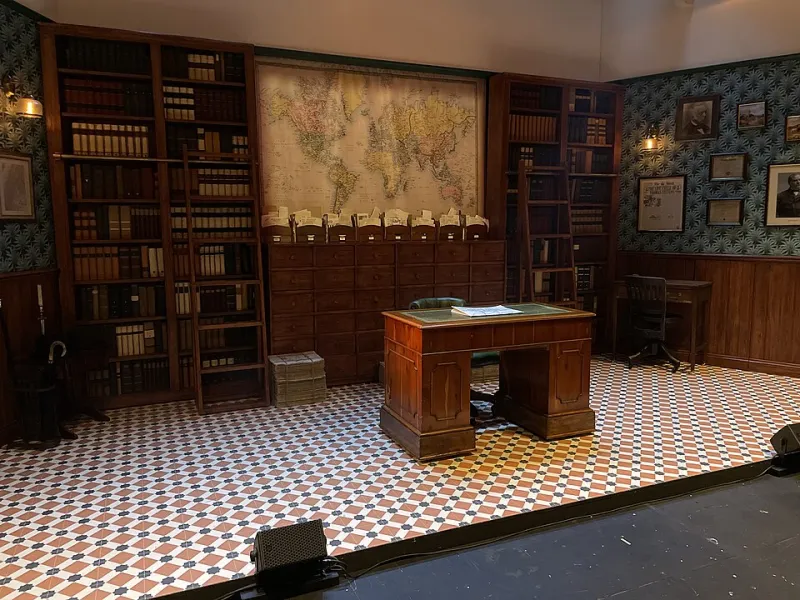
Photo: Lt. Brian Badura, Public domain, via Wikimedia Commons
The About page is often the most neglected page on a service business website. It is written once, updated rarely, and treated as a formality rather than a conversion opportunity. The result is predictable: a paragraph about founding values, a team photo, a list of vague commitments, and no clear reason for the reader to take the next step.
This is a mistake. For service businesses, the About page is not a corporate biography. It is a trust page. Visitors arrive with a simple question: can this team be relied upon with something important? The page either answers that question or leaves the reader to guess.
The polite corporate biography problem
Most About pages fail because they are written for the company rather than the customer. They begin with a founding year, describe a mission statement, and mention a commitment to excellence. These details are not harmful, but they are not persuasive. They tell the reader what the company says about itself, not what the reader needs to know before making a decision.
A service business competes on credibility. The buyer is often trying to reduce risk: Will this team understand my problem? Have they done this before? Will they communicate clearly? Can I trust them with my budget, my data, or my reputation? An About page that does not address those questions is a missed opportunity.
Trust is built through specifics
Specificity is the antidote to blur. A vague claim such as 'we are passionate about digital transformation' could belong to hundreds of companies. A specific statement such as 'we help US manufacturers modernize outdated dealer portals without disrupting daily operations' gives the reader something to evaluate.
The same principle applies to team proof. A list of job titles is less useful than a short explanation of who does what and why it matters to the client. Customer evidence is stronger than self-description. A brief case example, a named testimonial, or a clear description of a problem solved will do more for trust than a page of adjectives.
The elements that actually matter
A strong About page usually contains five elements. The first is an origin story that explains why the business exists in relation to a customer problem. This should be brief and relevant. The reader does not need a full history; they need to understand the motive.
The second is team proof. Show the people who will do the work, describe their relevant experience, and make it easy to understand how the team is organized. The third is customer evidence. Use specific examples, testimonials, or outcome statements that are credible and verifiable. Avoid generic praise.
The fourth is clear values. Values should be expressed as behaviors, not slogans. 'We answer questions directly, even when the answer is not what the client wants to hear' is more useful than 'we value transparency.' The fifth is a single next step. The page should end with one clear action, not a scattered set of links. For some businesses, that step is a consultation. For others, it is a portfolio review or a short assessment.
A before-and-after framework
Before rewriting, read the existing page as a skeptical buyer. Highlight every sentence that could apply to a competitor. If most of the page is highlighted, the page is not doing enough work. Then answer three questions in plain language: What problem does this business solve? Who is it best suited to serve? Why should the reader believe the team can deliver?
After that, rewrite the page in four sections. Open with the customer problem and the reason the business exists. Follow with proof: team experience, relevant work, and customer evidence. Then state the values as operating principles. Close with one next step and a clear explanation of what happens after the reader takes it.
A before-and-after test helps. The before version often reads: 'Founded in 2012, we are a full-service digital agency committed to excellence and innovation.' The after version might read: 'We build and maintain websites for US professional services firms that have outgrown their original site but cannot afford a lengthy rebuild. Our team has handled more than 40 such projects, and we keep clients involved at every stage.' The second version is not more dramatic. It is more useful.
Design for trust, not decoration
The visual design of the About page should support reading, not distract from it. Use clear headings, readable type, and enough white space. Team photos should look professional but not overly staged. Customer evidence should be easy to scan. The page should work well on mobile, because many buyers will first encounter it on a phone.
Accessibility matters here as well. Clear contrast, meaningful link text, and properly structured headings make the page easier for everyone to use. Trust is also built through usability. A page that is difficult to read undermines the credibility it is trying to establish.
The quiet sales asset
The About page does not need to be aggressive. In fact, the most effective versions are often calm and direct. They answer the reader's questions, provide evidence, and offer a clear next step without pressure. That is what makes them a sales asset: they reduce uncertainty at the moment when the buyer is deciding whether to engage.
B8C Digital's view is that the About page deserves the same strategic attention as the homepage or a service page. It is not a formality. It is a trust-building instrument, and for many service businesses, it is the page that turns a curious visitor into a serious conversation.