Rented Foundations: A Pre-Mortem Audit for the Digital Infrastructure Your Business Does Not Own
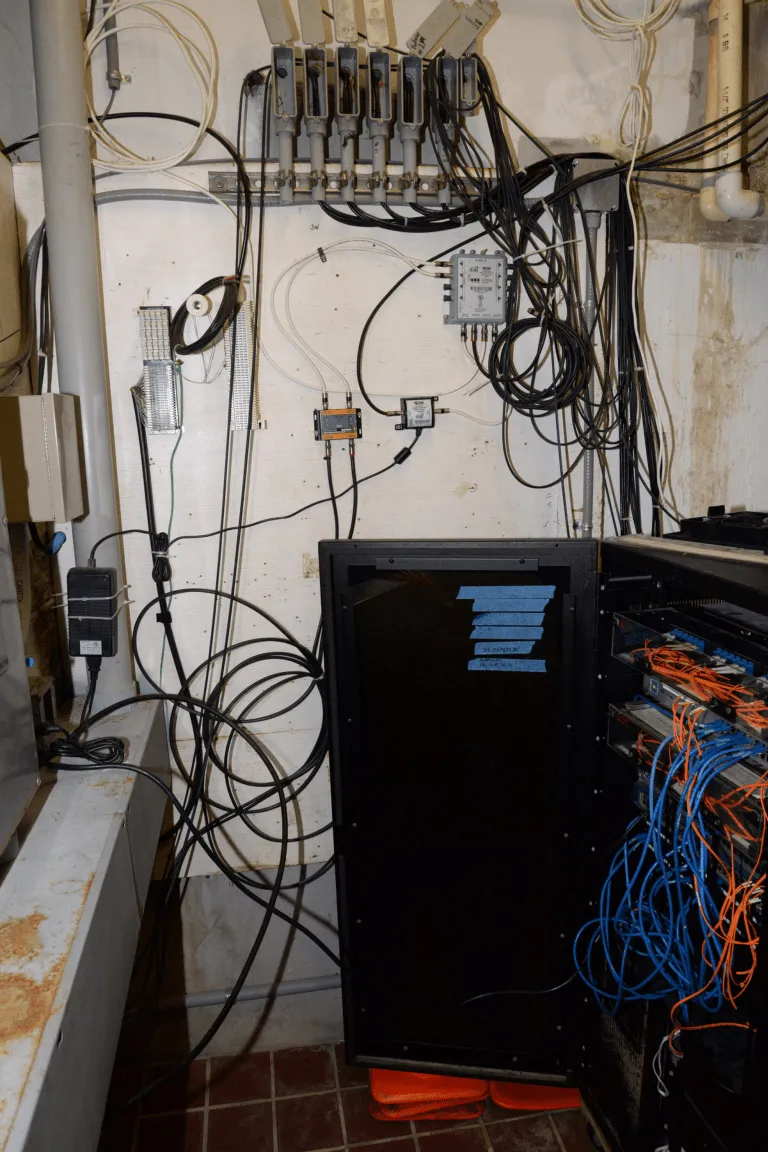
Photo: Federal Bureau of Investigation, Public domain, via Wikimedia Commons
Ask a leadership team who owns the company's domain name and the answers will vary. The marketing director assumes IT handles it. IT assumes the agency does. The agency, in turn, registered it under an account created by a contractor who left four years ago. Nobody is lying. The knowledge simply never converged in one place, and no one has needed it yet.
This is the ordinary condition of digital infrastructure in most small and mid-sized US companies. The layers stack up gradually — registrar, DNS, hosting, content management, email delivery, analytics, advertising accounts, review platforms, the agency retainer that binds several of them together — and each addition is a reasonable decision made at a moment when the priority was launch speed rather than continuity.
The risk is not hypothetical, but the framing should not be apocalyptic. Continuity planning is a discipline of small, unglamorous habits, and businesses that adopt it early gain something more useful than peace of mind: they negotiate better, switch vendors faster, and recover from disruption in days rather than quarters.
Begin With a Pre-Mortem, Not a Plan
A pre-mortem asks a single question: it is eighteen months from now and our digital presence has failed — what happened?
The answers tend to cluster. The agency folded and took the hosting credentials with it. The registrar suspended the domain after a payment card expired. The email platform locked the account after a fraud flag, and the password reset went to an address nobody monitors. An advertising account was restricted, and the appeal required documentation the business had never assembled.
None of these are exotic. All of them are recoverable — if someone has the right information at hand, and unrecoverable in practice if the information lives in someone else's inbox.
The Access Inventory
Start with a single spreadsheet, and resist the urge to make it elaborate.
List every service the business depends on to operate publicly: domain registration, DNS, web hosting, content management, e-commerce platform, email marketing, transactional email, analytics, tag management, advertising accounts, social profiles, review platforms, payment processing, and any agency or freelancer portal. For each, record the account owner of record, the billing contact, the technical contact, whether two-factor authentication is enabled, who holds recovery access, and where credentials are stored.
The inventory is usually complete in two hours and surprising in at least three places. A dormant service still billing monthly. A domain registered to an individual rather than the organization. A recovery email routed to a personal address.
Ownership Written Down
Contracts and terms of service determine reality more than intentions do. Three clauses matter most.
Domain registration. The registrant contact should be the business, using a role-based email the company controls. An agency that registers a client's domain in its own name is not necessarily acting in bad faith, but it creates a dependency that must be documented and, ideally, corrected.
Asset ownership and portability. The agreement should state plainly that content, data, code, and creative are the client's property, and that export is available on request at any time during and after the engagement.
Exit terms. Notice periods, handover obligations, and the cost of migration are all negotiable at signature and nearly impossible to negotiate afterward.
Test the Export Before You Need It
A backup that has never been restored is a hope, not a backup. The same logic applies to data portability.
Once a year, attempt the export you would need in a crisis. Download the customer list from the email platform. Pull the site content and media library. Confirm the analytics history is accessible from an account the business controls. Verify that advertising account data can be retrieved and that billing ownership can be transferred.
What surfaces is rarely a disaster. It is usually a manageable list: a platform whose export format loses custom fields, a CMS whose media files require manual reassembly, a subscription billing system whose customer records do not travel cleanly. Finding these gaps on a Tuesday in a quiet quarter is worth considerably more than discovering them during a vendor collapse.
The One-Page Continuity Brief
The inventory is an appendix. The brief is what gets read.
A single page should state, for each critical service, three things: who to contact if it fails today, what the immediate fallback is, and who has authority to spend money to resolve the problem. For a small business, the fallback is often modest — a placeholder page, a forwarded inbox, a temporary checkout alternative — and that is fine. The point is that the decision has already been made by someone calm.
Include a short section on communication. If the website goes dark during peak season, who writes the customer note, and where does it appear? A prepared holding message turns a technical incident into a display of competence.
Continuity as a Commercial Advantage
There is a competitive dimension that vendors rarely discuss. A business that can migrate cleanly is a business that can renegotiate. A business that knows exactly what it owns can change agencies in weeks instead of months. A business with tested exports can adopt a new platform when a better one arrives, rather than remaining on an inferior one because leaving is too complicated.
Dependency is not inherently bad. Outsourcing infrastructure is sensible for most organizations. But dependency that is undocumented, unmeasured, and untested is not a strategy — it is an assumption. Assumptions are cheap until the day they are not.